Boggle can be a brilliant word game for children. It builds spelling and vocabulary, rewards quick thinking and lets the whole family play at the same time. With the standard rules, though, younger players can find it hard to keep up with older siblings or adults.
The good news is that Boggle is easy to adapt. This guide covers how to set up a kid-friendly game, simple rule changes that keep things fair, playful variations and classroom activities that keep children engaged and confident.
Is Boggle a Good Game for Kids?
Boggle works well for children who can read and spell simple words. It doesn’t require long periods of sitting still, and every round starts fresh, so a disappointing round is quickly forgotten.
It also helps children practise useful skills without it feeling like schoolwork. Because they’re racing the clock and hunting for words, the learning happens naturally.
The skills Boggle builds
- Spelling: every word must be written or entered correctly to count.
- Vocabulary: children meet new words when they compare lists or review missed words.
- Letter patterns: they learn common pairs, endings and plurals by spotting them on the board.
- Focus and quick thinking: the timer encourages concentration for short, manageable bursts.
Setting Up a Kid-Friendly Game
A little preparation makes a big difference. Before the first round, think about the board, the timer and how children will record their words.
Start with the smaller board
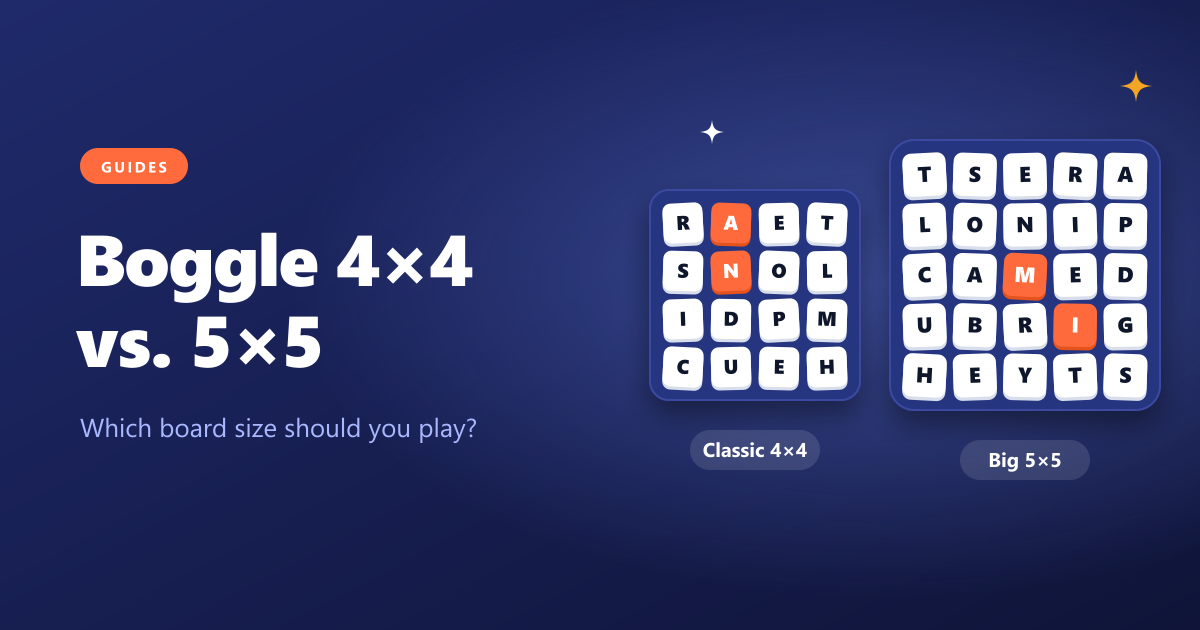
The Classic 4×4 board has fewer letters to scan and accepts three-letter words, which suits beginners well. The larger 5×5 board can feel overwhelming at first and usually requires longer words.
Make the board easy to see
If several children are playing, crowding around one small tray can cause frustration. Showing the letters on a large screen lets everyone see clearly from their own seat.
If you don’t have the dice at hand, you can generate a new board with the Boggle Generator and display it on a laptop or TV. You can make a fresh board for each round, or share a link so another family or class can play exactly the same letters.
Give everyone paper and a pencil
Writing words down is good spelling practice, and it makes comparing lists easy at the end of the round. For very young children, a parent or older sibling can help write while the child spots the words.
Simple Rule Changes for Younger Players
You don’t have to follow every competitive rule at home. These adjustments keep the game fair and fun when players of different ages are taking part.
Use a longer timer
Three minutes can feel very short for a young speller. Try five minutes at first, then shorten the timer as children grow more confident. A longer timer reduces stress and gives everyone time to find more than just one or two words.
Allow shorter words
For very young players, consider accepting two-letter words such as IT, ON or GO. It gives them more chances to score and keeps them involved, especially in the first few rounds.
Keep shared words
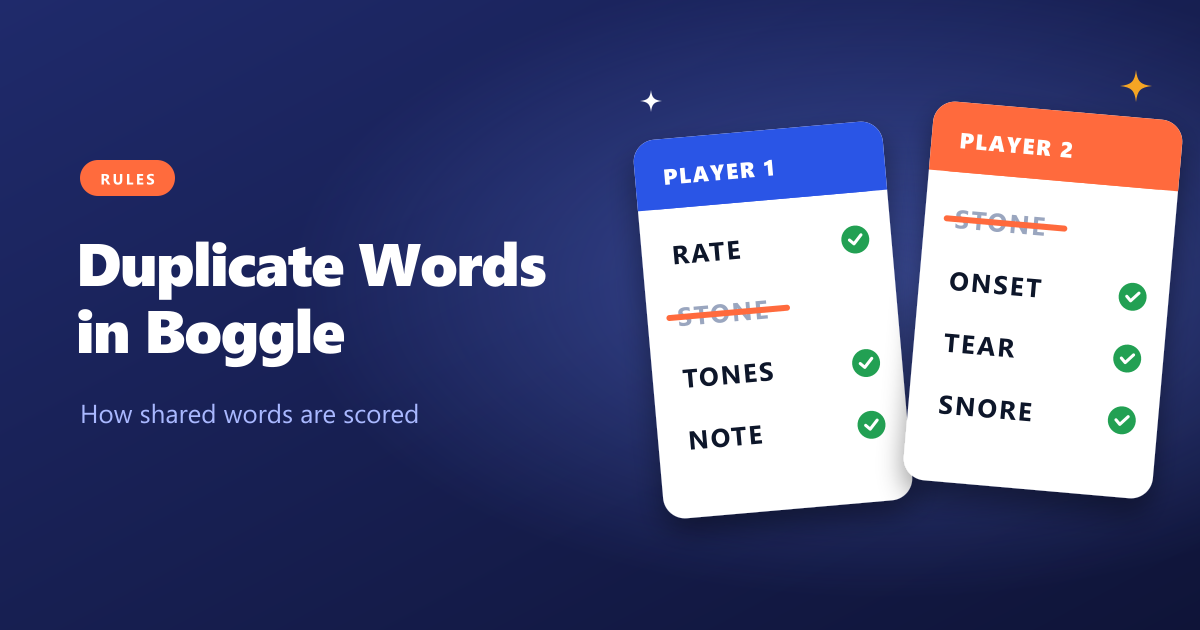
In traditional Boggle, words found by more than one player are crossed out. With children, it’s usually kinder to let everyone keep their valid words, so nobody loses points simply for spotting an obvious word.
Play in teams
Pair a younger child with an older sibling or adult. Teams can discuss words together, which turns the round into a shared activity rather than a contest, and helps younger players learn from older ones.
Give extra credit
Award a bonus point for the longest word, a creative find or a word that uses a tricky letter. Small rewards encourage children to keep looking past their first few words.
Fun Ways to Play Boggle With Kids
Once children understand the basics, small twists keep the game fresh. These ideas work well at home and in the classroom.
Themed word hunts
Choose a theme, such as animals, foods, colours or action words, and only count words that fit. Themes make the search feel like a game and help children think about word meanings, not just spelling.
Longest-word challenge
Instead of counting every word, the player with the longest valid word wins the round. It encourages children to build on short words, for example turning CAT into CATS.
Letter of the day
Every word must contain a chosen letter, such as A or S. It’s a simple way to focus attention and makes children look at the board in a new way.
Beat your last score
Each player competes against their own previous round rather than each other. This works especially well when ages are mixed, because everyone can improve without being compared to older players.
Daily family puzzle
Play the same board each day and compare results at dinner. The Daily Boggle puzzle gives everyone the same board for the day, so children can play at their own pace and then compare their scores and favourite words with the rest of the family.
Using Boggle in the Classroom
Boggle also works well as a short classroom activity. A single board shown to the whole class can support a range of spelling and vocabulary goals, and it needs almost no preparation.
- Start a lesson with a two- or three-minute word hunt as a warm-up.
- Ask students to sort their words by length, word class or spelling pattern.
- Challenge small groups to find words that use a target spelling rule, such as -ING or -ED.
- Review a few interesting words together and discuss their meanings.
- Turn the class’s combined list into a word wall for the week.
Keeping the Game Positive
The aim is to help children enjoy words, not to keep score perfectly. Celebrate interesting finds, help them trace words they almost spotted and keep rounds short so energy stays high.
If a child is clearly struggling, switch to teams or a themed hunt. It’s also fine to stop after a couple of rounds while everyone is still having fun, so they’re keen to play again next time.
Final Thoughts
Boggle is easy to adapt for children. Use the smaller board and a longer timer, relax the rules where it helps and add playful challenges to keep things interesting.
With a few small tweaks, it becomes a game the whole family can enjoy together, while quietly building spelling and vocabulary.