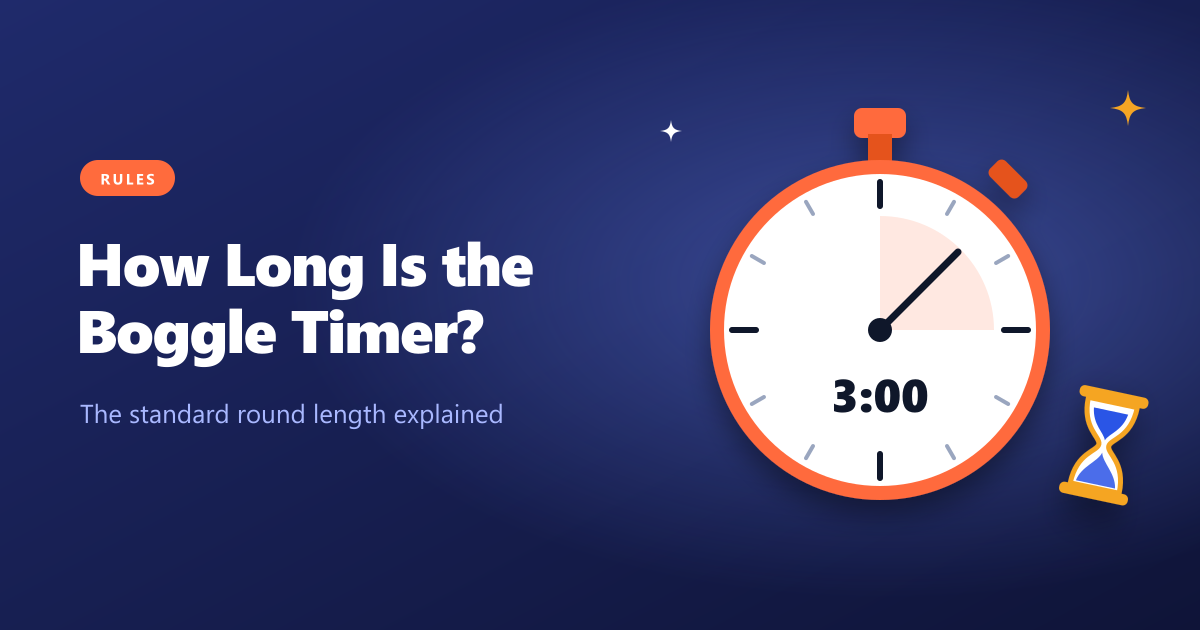
A standard round of Boggle lasts three minutes. The classic game comes with a small sand timer, and when the sand runs out, everyone stops writing and the scoring begins.
Three minutes isn’t a fixed law, though. Plenty of groups adjust the timer for younger players, bigger boards or quick warm-up rounds. This guide explains why the standard length works so well, when changing it makes sense, how timing works online, and how to make the most of a short round.
The Standard Boggle Timer: Three Minutes
The three-minute round is part of what gives Boggle its character. It’s long enough to find a good number of words, yet short enough to keep everyone under pressure from the first second to the last.
With a sand timer, the round starts as soon as the timer is flipped after the letters are revealed. Everyone searches the same board at the same time, so the timer also keeps the game fair: nobody gets extra time to study the letters before the others.
Why three minutes works so well
A good round needs a little tension. With too little time, players only find a handful of obvious words. With too much time, the round drags and the board starts to feel exhausted.
Three minutes sits nicely between the two. Most players can collect a solid set of short words in the first minute, then spend the remaining time hunting for longer, more valuable words. It also keeps a game moving, so you can play several rounds in a short session.
How the timer shapes the game
Because the clock is always running, Boggle rewards quick decisions. You can’t afford to stare at one difficult word for too long, and you learn to switch between areas of the board efficiently.
That pressure is also what makes the end of a round exciting. Many of the best finds happen in the final seconds, when players spot one last long word just before time runs out.
Does a Bigger Board Need a Longer Timer?
Larger boards have more letters to scan and usually more words to find, so it’s natural to wonder whether the round should be longer. There’s no single answer that every group follows.
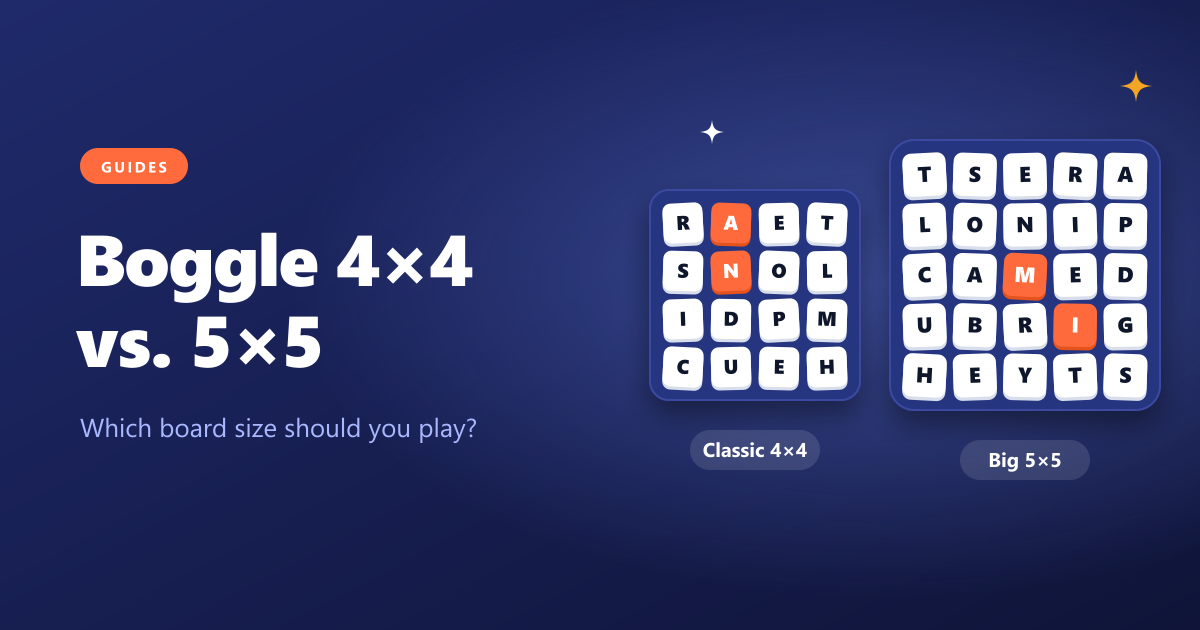
Some players keep three minutes for both the Classic 4×4 board and the Big 5×5 board. On the bigger grid, that makes rounds feel fast and frantic, with far more words available than anyone can find. Others add a minute or two, giving players time to explore the extra letters and look for longer words.
Either approach works, as long as everyone agrees before starting. If you’re choosing between the two board sizes, our comparison of Boggle 4×4 vs. 5×5 explains how each one plays and who it suits.
Choosing a Different Round Length
Changing the timer is one of the easiest ways to tailor Boggle to your group. A shorter round sharpens speed, while a longer round gives beginners room to think. Here’s a simple guide to the most common options:
| Round length | Best for | How it feels |
|---|---|---|
| 1 minute | Warm-ups and quick breaks | Fast and intense |
| 2 minutes | Speed practice | Brisk, with little time to linger |
| 3 minutes | Standard play | Balanced |
| 5 minutes | Beginners, children and big boards | Relaxed, with time to explore |
When to use a shorter timer
One- and two-minute rounds are great for warming up or practising speed. They force you to rely on quick pattern recognition, such as spotting plurals and common endings, rather than slow letter-by-letter searching.
Short rounds also suit busy days. A single one-minute round is a quick mental break that still gives you a score to beat next time.
When to use a longer timer
Five-minute rounds work well for new players, younger children and larger boards. The extra time reduces pressure and gives everyone a chance to find more than just the obvious words.
A longer timer is also useful when you’re learning. With more time to trace paths carefully, you’re more likely to notice the patterns that will later help you in faster rounds.
Timing Rounds When You Play Online
Playing online removes the need to watch a sand timer. The countdown runs automatically, the round ends on its own, and nobody has to keep an eye on the clock.
In our Boggle word game, level rounds use the standard three minutes, while Free play lets you choose a 1, 2, 3 or 5-minute timer. The time remaining is always shown above the board, a progress bar shrinks as the round goes on, and the clock turns red in the final 15 seconds.
If you’d like a consistent timed challenge, you can also try the Daily Boggle puzzle. Everyone gets the same board each day with a three-minute timer, which makes it easy to compare scores with friends and family.
What Happens When Time Runs Out?
The end of the round should be clear-cut, so there are no arguments during scoring. In a traditional game, a few simple rules apply:
- Everyone stops writing the moment the timer ends.
- A word that was only half written doesn’t count.
- Players then read out their lists, cross out shared words and add up their scores.
Online, the game simply stops accepting new words when the countdown reaches zero. It then shows your score and lists every word on the board, so you can see what you missed.
No Timer? Here’s How to Time a Round
Sand timers are easy to lose, but that shouldn’t stop a game. Any reliable timer will do, as long as everyone can see or hear when time is up.
- Use the timer or stopwatch on a phone and place it where everyone can see it.
- Ask a smart speaker to set a three-minute timer.
- Display the board on a laptop or TV and let an online game handle the countdown.
Whatever you use, start it at the moment the letters are revealed, so nobody gets a head start.
Making the Most of a Short Round
Three minutes passes quickly, so a little planning goes a long way. A simple approach is to collect easy short words in the first minute, look for word endings such as -ING and -ED in the second, and save the final minute for longer words and plurals.
For more ideas on using your time well, read our guide on how to get better at Boggle, which includes practical tips for scanning the board and building words faster.
Final Thoughts
The standard Boggle timer is three minutes, and it suits most games perfectly. Use a shorter timer for quick practice, a longer one for beginners or bigger boards, and always agree on the round length before the letters are revealed.
Whichever timer you choose, the race against the clock is what makes every round exciting.